Circular Economies

Table of Contents

Original reflection, November 2025:

CLOSING THE LOOP

On 17 November 2025, Artist Loren Kronemyer returned for a final visit to Kepa Kurl/Esperance with Metatechnician Hosting. This dispatch reflects on their accumulated knowledge exploring the trajectory of munitions and metals that connect this place to the world.


TRAJECTORY

A circular economy posits continuous recycling, where value is accumulated through transformation of materials, rather than lost through degradation. As our cycle draws to a close, I will use this opportunity to present a reflection back through the stages of transmutation that occurred.

Our three-stage residency in Esperance has provided us with coordinates and collaborators that have come together across an elaborate cradle-to-cradle artwork we have called Materiel World. The title Materiel World borrows a word from the military: materiel, which refers to equipment, munitions, and other inorganic inventory besides personnel. The raw elements that make up this artwork have now completed their first round of reincarnation, forever binding sites of extraction that link Kepa Kurl/Esperance Western Australia, Lutruwita/Tasmania, and the rest of the world.

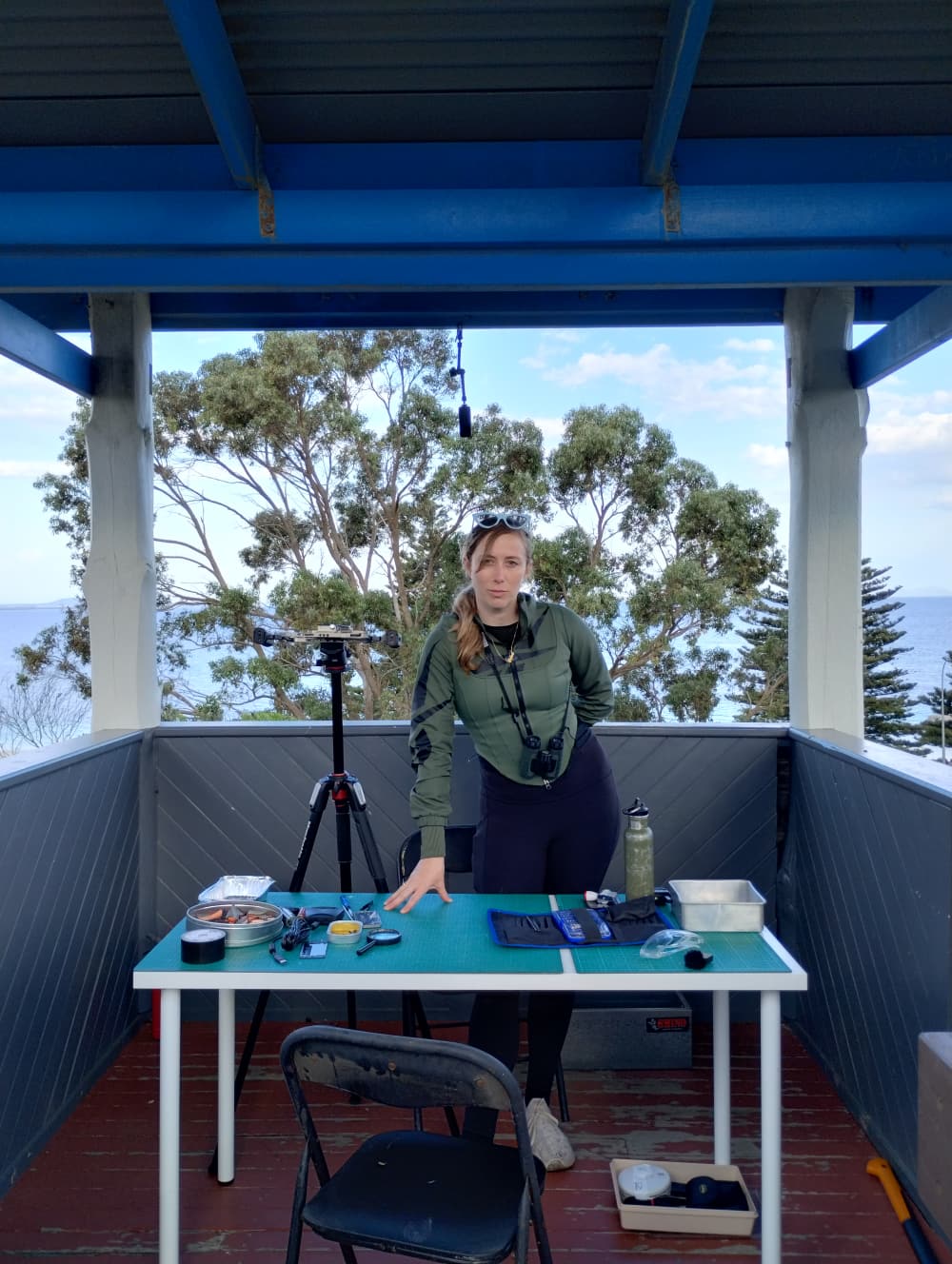
In September 2024, I conducted an E-Waste Buy-Back event at Cannery Arts Centre. Local residents were invited to trade in electronic waste, to be re-mined and used to create a recycled bullet, a warped re-imagining of the Western Australian gun buy-back that was underway at the time. To prepare for this event, we visited local shooting associations, private gun collectors, the local tip and e-waste consolidation point, and relics of famous electronic space waste that have rained down upon this region.

  • Loren Kronemyer, e-waste buy-back event, 2024, Cannery Arts Centre's crows nest. Photo: Elizabeth Pedler.
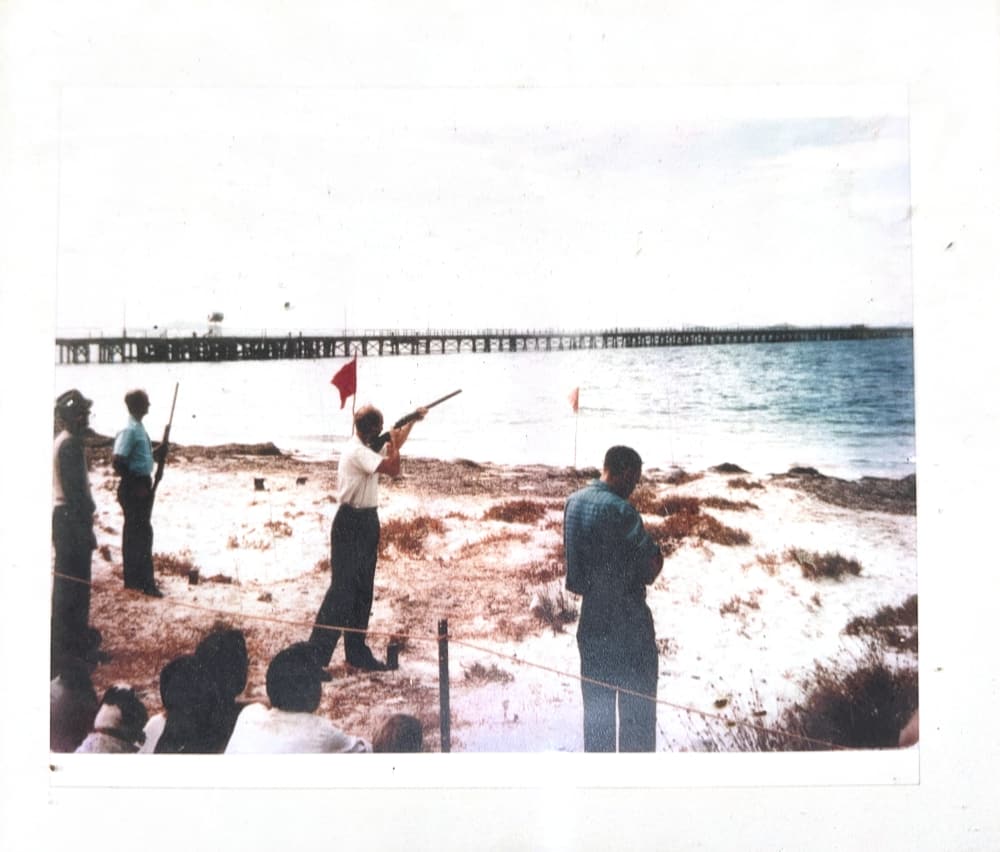
  • Loren Kronemyer, archival Esperance Clay Target Club, scanned photograph, 2025, Esperance Jetty. Photo: Esperance Clay Target Club.
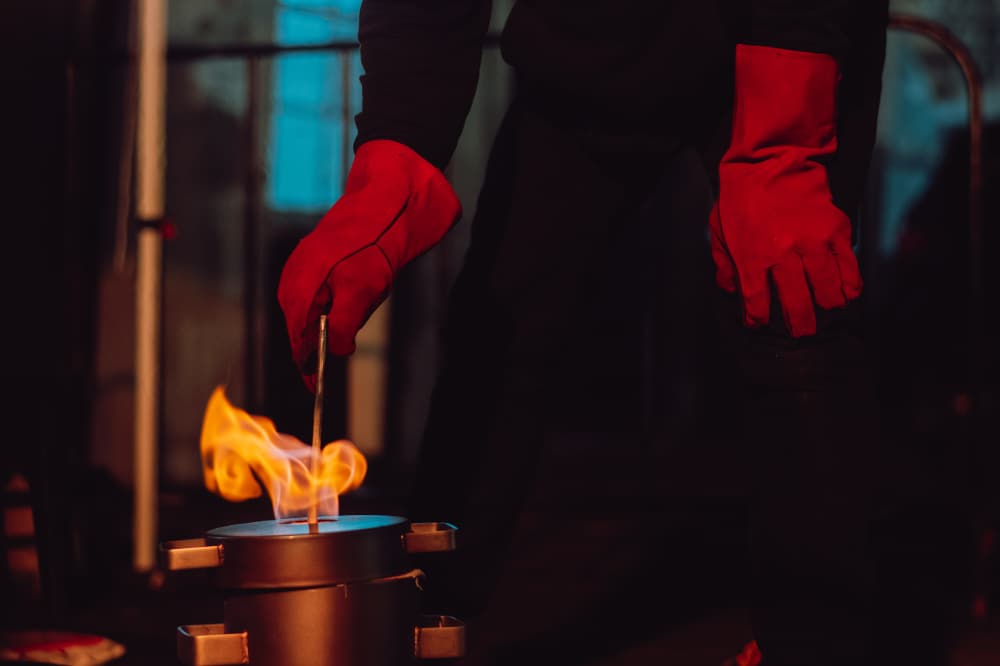
  • Loren Kronemyer, live bullet casting at Festival of Live Art F.O.L.A. [AKL], 2025. Photo: David St. George.

The community e-waste we procured was reverse-mined for copper. This raw material was cast into an inert bullet artwork, with supervision from licensed firearms experts. A live E-Waste Buy-Back and Bullet Casting experiment also took place in Tāmaki Makaurau, Auckland courtesy of Festival of Live Art [AKL]. The inert artworks produced by these events were then returned to the Mount Lyell Copper Mine in Lutruwita/Tasmania.
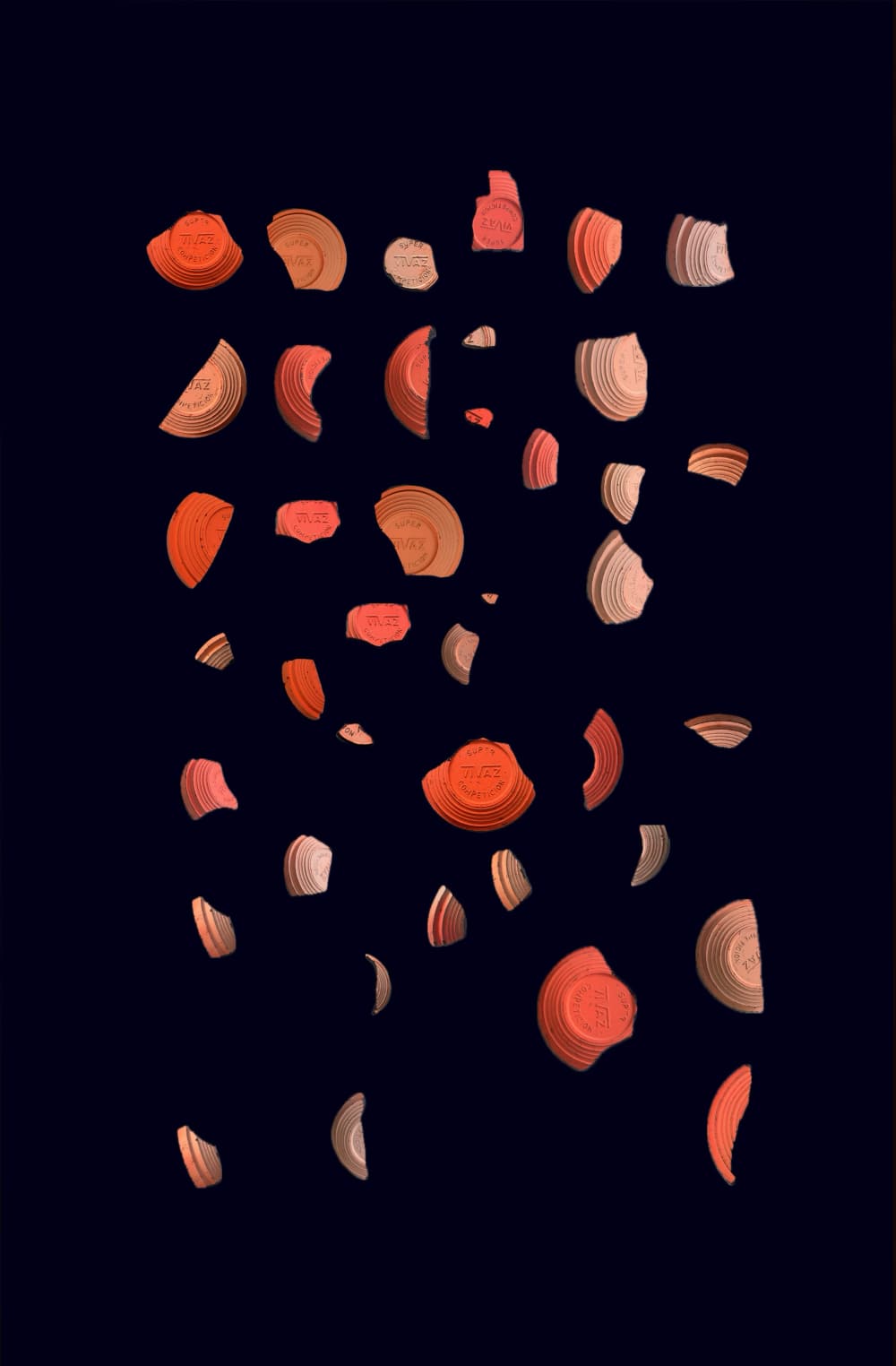
Loren Kronemyer, clay target collage, 2024. Design: Metatechnician Hosting.

A film was made of this process. In September 2025, a version of this film was screened at Contemporary Art Tasmania, inside a partially functional reconstruction of the Esperance Pistol Club within the gallery. In November 2025, I brought the film back to its point of origin, for a screening at the Esperance Pistol Club indoor air rifle range, for members and collaborators.

Loren Kronemyer, Mining, 2025, film. Videographer: Joseph Shrimpton at Flare Tasmania.
Annie Oakley, Filmed November 1, 1894, in Thomas Edison's Black Maria studio in West Orange, New Jersey. Performer: Annie Oakley (“Little Sure Shot”). Camera, William Heise. Duration: 0:21 at 30 fps.

As an American living in Lutruwita/Tasmania, I have historically avoided guns, and never owned a gun. If I was going to learn about guns as tools, I wanted to do so through a framework that was explicitly peaceful. This resolved into the imperfect idea of creating a recycled copper bullet. A bullet that could undo harm, made with the potential to return stolen, mined materials back into the ground. [A circular economy.]
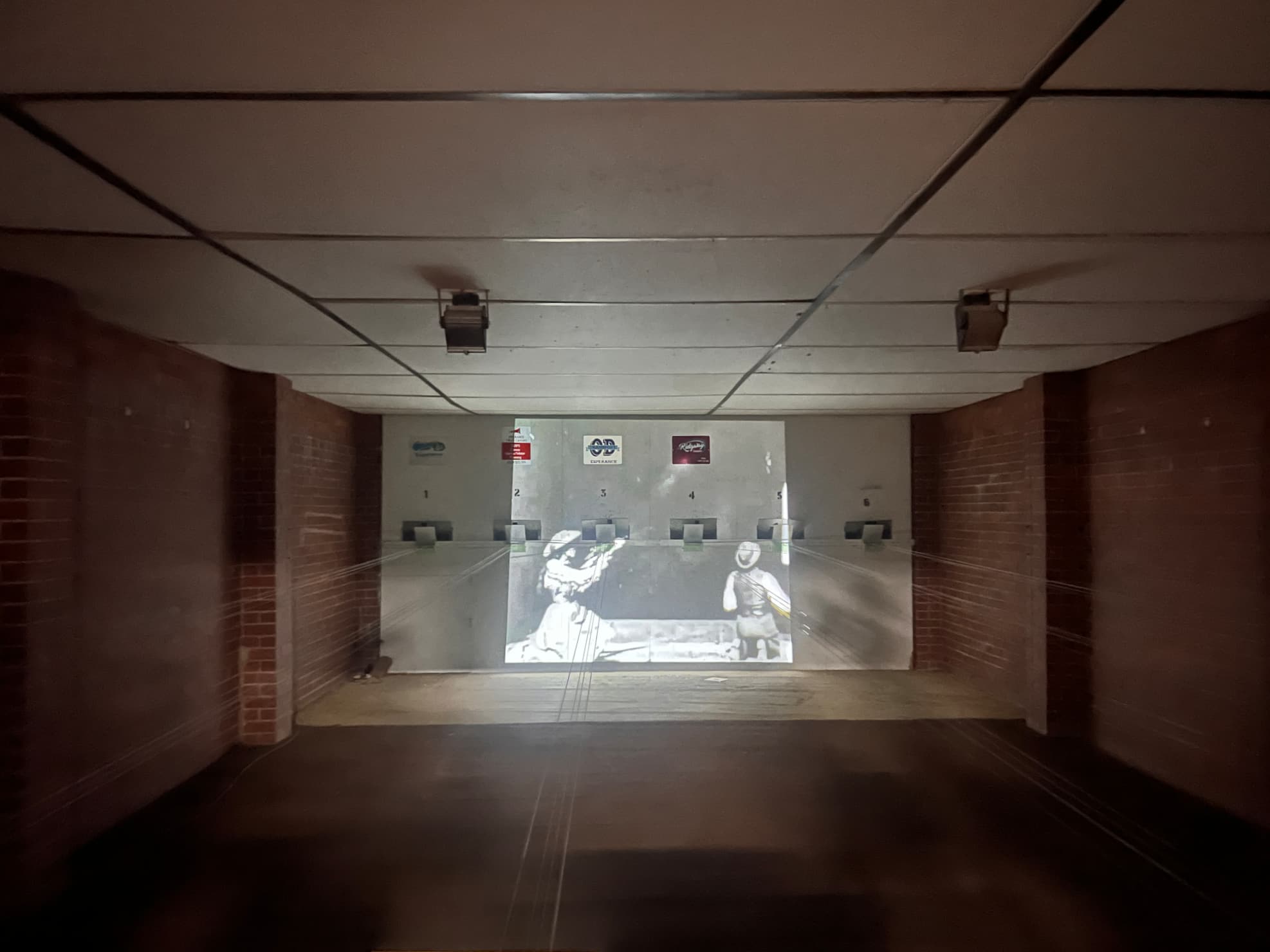
Loren Kronemyer, Materiel World screening at Esperance Pistol Club, 2025. Photo: Jennene Riggs.

Credits

  • Project

    Materiel World
  • Artist

    Loren Kronemyer (she/her), TAS
  • Location

    Kepa Kurl, Esperance, Western Australia
  • Community Partner

    The Cannery Arts Centre
  • Co-creator and Metatechnician

    Hosting
  • Armourer

    Wes Miles, Paul Miles
  • Co-Conspirator

    Jenni Large
  • Legal Department

    Sebastian Marcu at Studio Legal
  • CAT Fabrication and Installation

    Karl Dauner, Bob O’Connor, Stuart Houghton, Andy Barnes
  • Leadlight Artist

    Margaret Ella
  • E-Waste Scrutineer (Tāmaki Makaurau)

    Batanai Mashingaidze
  • Assistant Producers (Kepa Kurl)

    Allyson Tas and Sarsby
  • Special Thanks

    Esperance Pistol Club, Esperance Rifle Club, Esperance Clay Target Club, Esperance Pottery Club

Artist

Loren Kronemyer is an artist living and working in remote Lutruwita/Tasmania. Her works span objects, interactive and live performance, experimental media art, and large-scale world building projects aimed at exploring ecological futures and survival skills. She works solo, and in collaboration as Pony Express. Her approach of deep and immersive research has led her to foster collaborations with a number of niche societies, labs, and specialists. These include Australia's last broom factory, from whom she learned to make millet brooms for the project Millennial Reaper; and the World Archery federation, from whom she earned a coaching qualification for her project After Erika Eiffel, and the scientists at the International Centre for Radio Astronomy Research, with whom she developed her show Receiver. She received the first Masters of Biological Arts Degree from SymbioticA Lab at the University of Western Australia and is a PhD Candidate at the University of Tasmania. Her work has been hosted by Santarcangelo Festival (Italy), Forum of the Future (Portugal), Interformat Symposium (Lithuania), Dark Mofo (AU), Liveworks (AU), Next Wave (AU), PICA, Perth Festival, The School of Visual Art (New York), and the International Symposium of Electronic Arts. She is now the Artistic Director of The Unconformity, an organisation that develops and presents experimental art in the West Coast of Tasmania.

Community partner

The Cannery Arts Centre is a dynamic community led arts facility presenting contemporary visual art exhibitions, live music events and engaging creative learning programs. Nestled on the scenic Kepa Kurl-Esperance foreshore, and housed in a heritage fish Cannery, artists are inspired and supported in artistic endeavours in shared transformative spaces. Transcending geographical boundaries, the Cannery brings global cultural riches to the region while fostering networks and pathways for capacity building and two-way learning. The centre celebrates and nurtures creativity, fostering connections, collaborating to create a vibrant arts and cultural landscape enriching the lives of community members and visitors.