
Project
Ilona McGuire and Zali Morgan (WA) in Carnamah
Ilona: Just under 4 hours drive north from my apartment by the sea, I ventured up and out into Amangu/Badymia boodja.
Through long stretches of harvested wheat fields, I prepared myself for what I expect of these country towns. It’s hard to tell how you’ll be treated in country towns as an Aboriginal person, unless you’ve been there before. And this is my first time visiting Carnamah, but to be honest my excitement for something different distracts me from any unease.
I imagine how different this landscape looked over these expanses not too long ago… and what my old people knew about them… How tall were the trees? Where were the waterholes? Where did they sleep? Where did they have ceremony? I never expect to find the answers, but I always ask. A bit of my heart feels sad to think about it, but that’s just the way our story goes, unna?
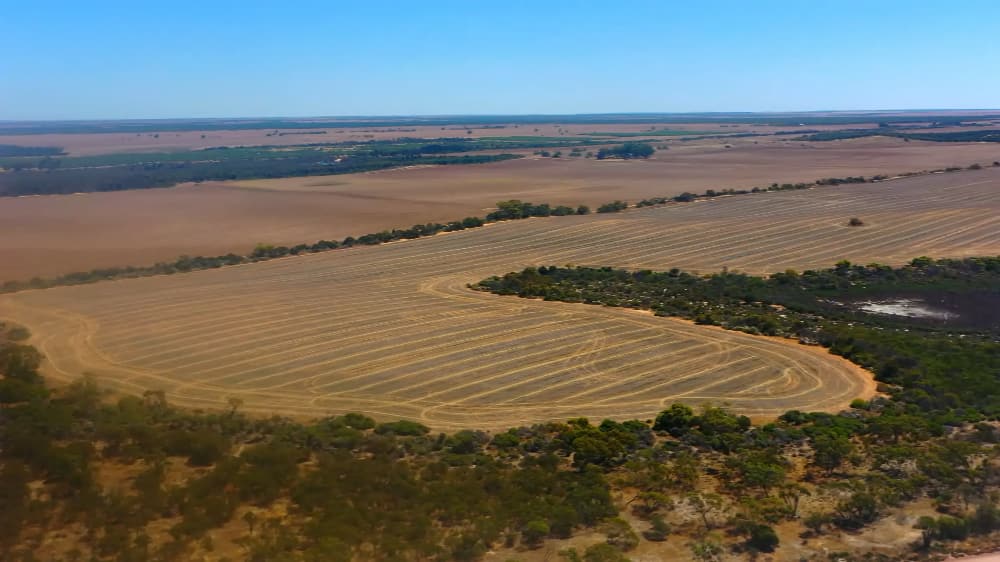
Zali: On the drive out of Noongar Boodjar, to a place and Country I had yet to feel, ngany koort felt weary and tired. After many a very busy month of travelling, I was ready to plant my feet, but up and off I was again. The dry heat of the air thawed me out, offering a gentle break from the evening breeze. I felt curious about the community, the people that made up this small town, where on a Sunday arvo you mightn’t see a car roll by, but you’ll definitely spot a freight train or two any day of the week.
I waited for things to speak to me.
Something kept lingering with me whilst trailing behind Martine to Morawa, Mingenew, Coorow, and the surrounds of Carnamah. An absence.
Initially I felt it was the absence of the landscape. Amongst the rolling paddocks of wheat, barley and lupins, I kept wondering what this used to look like. In the old times, when mob and Boodjar were one. When we kept Boodjar healthy, it kept us healthy. Now just farmed till it runs dry. Mining, pastoral, or growing crops, taking until nothing is left.
I felt the Mulliah. I asked around if anyone knew anything about the lake’s cultural significance or importance, but to no avail. The absence was clear here too. As did most towns across australia, Carnamah was built on the back bones of mob. Carnamah Tommy was a good man, I am told.
As much as I started to feel this absence, I started to question. Absence wasn’t right.
It was the erasure.
Wiped from memory and voice.
Not recognised in stories. Past or present.
If you were one of the good ones, you might get a mention for the flowers you sent for the funeral.
-
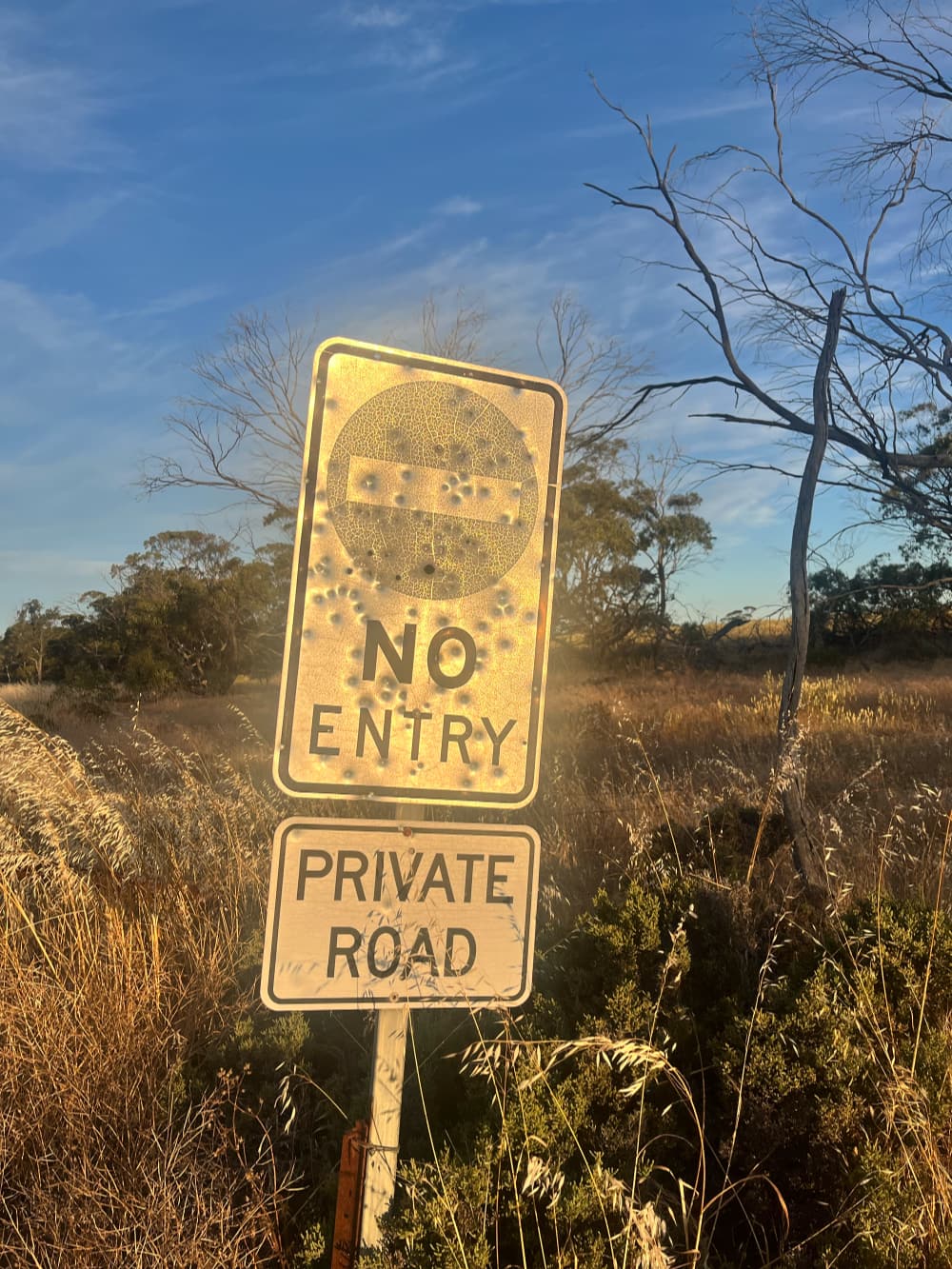
Carnamah, 2026. Photo: Zali Morgan. -
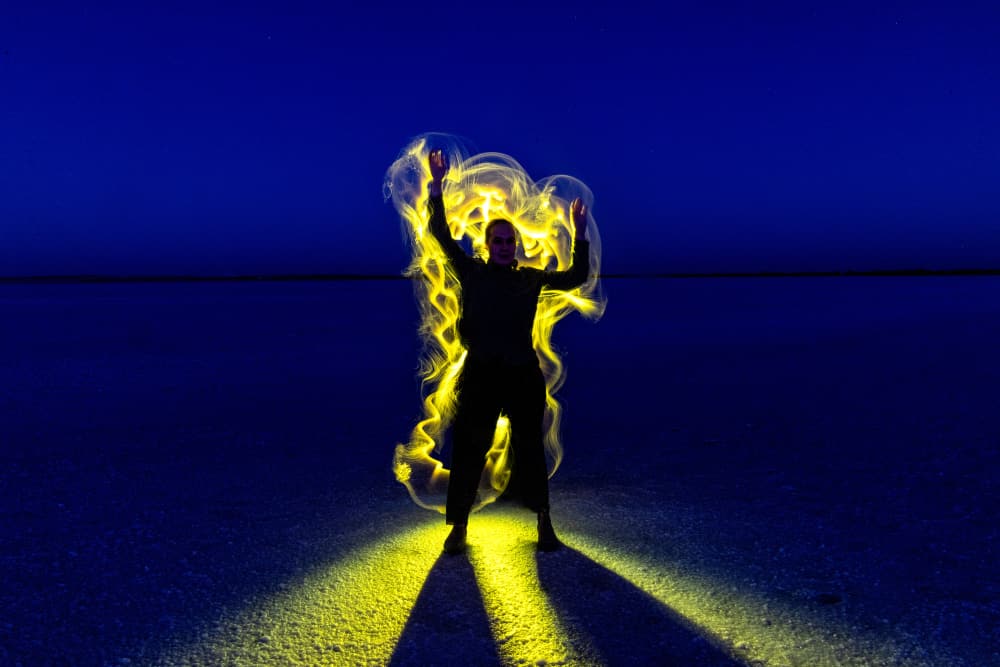
Portrait of Zali Morgan, 2026, Mulliah Salt Lakes, Carnamah. Photo: Martine Perret.
Ilona: I get a sense there are countless untold stories that bubble under the surface of an otherwise happy town. I’ve had so many lovely interactions with the community members around North Midlands Project, the shire, the post office, the café and the local grocers; yet I find myself being reclusive and wanting to hide in the shadows a bit more than I usually would if I was in Perth.
It was increasingly obvious to me that the story of the people before the pastoralist colony has been buried deep below the pride of the town’s foundation. Like the Carnamah water spring, somewhere near the MacPherson farm, hiding in a thirsty field.
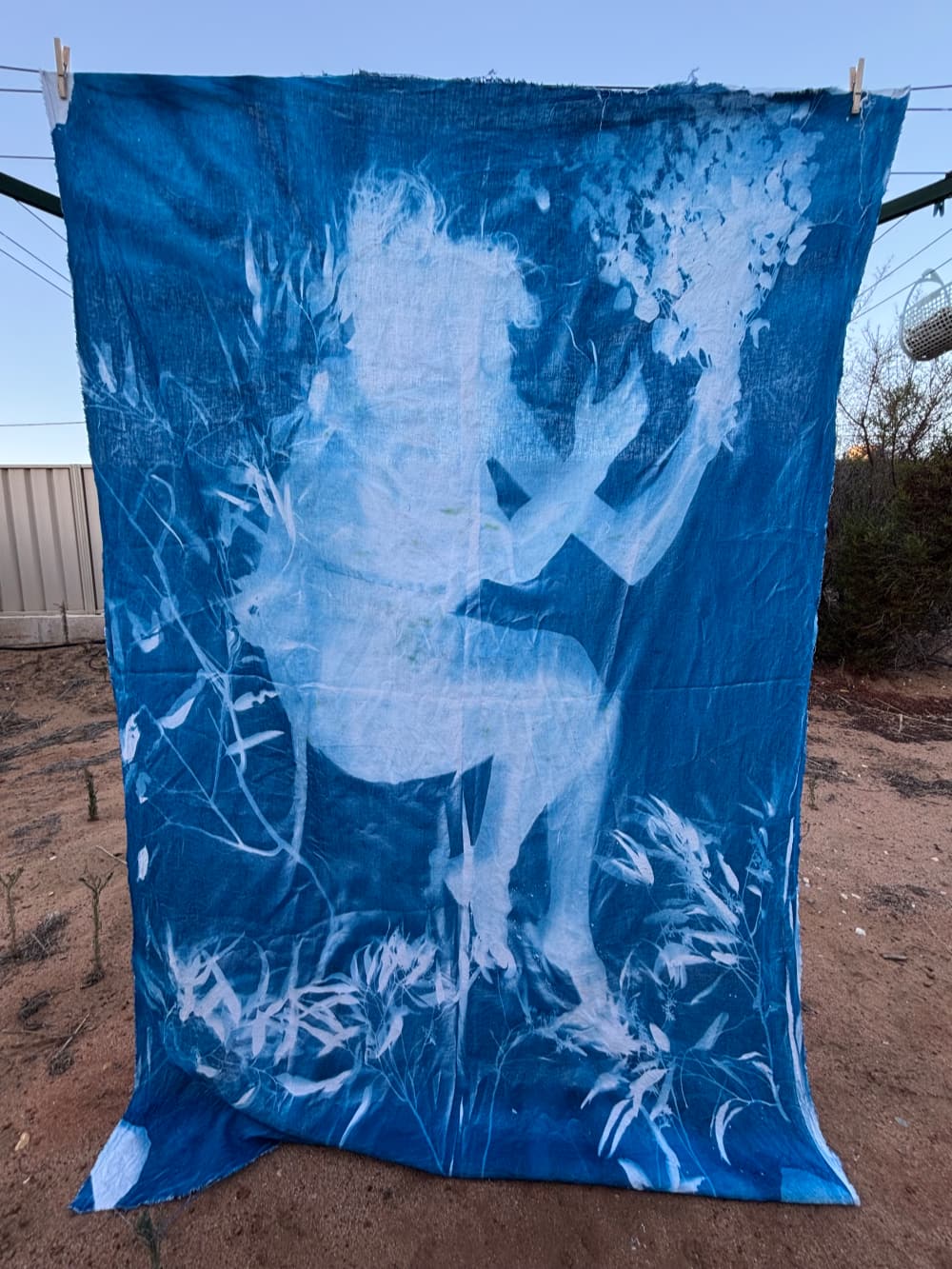
With all this in mind, I wanted to reflect my pondering, longing and wonder through a medium that can capture glimpses, impressions and shadows like a distant memory that fades and transforms over time. With so much natural sun light, surely there was a way I could harness it to expose the shadows of a forgotten world.
I’ve been using sun exposure at midday when the sun is right over head. l’ve begun testing cyanotype printing to capture my own body and other objects I found around town including water and local native tree leaves. Testing these materials has been an exciting and satisfying process.
Zali: It is easy to read between the lines, to remember this is stolen land.
Or maybe it is easy to forget this Boodja, this Country sustained life for millennia.
Before it was used and taken apart.
Now a barren landscape, used many times over and over again to fulfil the Crown’s needs.
Left to dry out, depleted and exhausted, this Boodja continues to serve as a vessel.
A vessel to carry resources for crops, farms, mines.
But also a vessel to carry story, truth, and culture. I have returned with a renewed sense of making and the story that needs to be told.
The story that holds many, but reminds us of what we forget when we operate business as usual.
A reminder that we need to consult the Birdiyas, the bosses, when we operate, make and spend time on the Boodja that has kept their culture and ancestors alive.
As we travel up to Mullewa, passing the relentless rolling hills of cleared farmland, I think of Aunty Charmaine. She was the boss of Mullewa; you wouldn’t go there without consulting her. I feel hopeful that I can connect with more of her family and continue her legacy. As always with community, it’s flexible and changing. When sorry business arises, we move how the community wants.
Even when visiting the Mullewa Community Resource Centre, I am reminded of Aunty Charmaine, when her book Nganajungu Yagu is sitting there looking at me. Her words are staunch and forthright. Speaking her truth and the needs of her community. I feel revitalised reading and remembering her. One poem especially reminds me why and who we are doing this for.
Buried Deep
Buried
within
Womb
mother,
Earth
Warm
protected
flows
Powerful
energy
in and is me